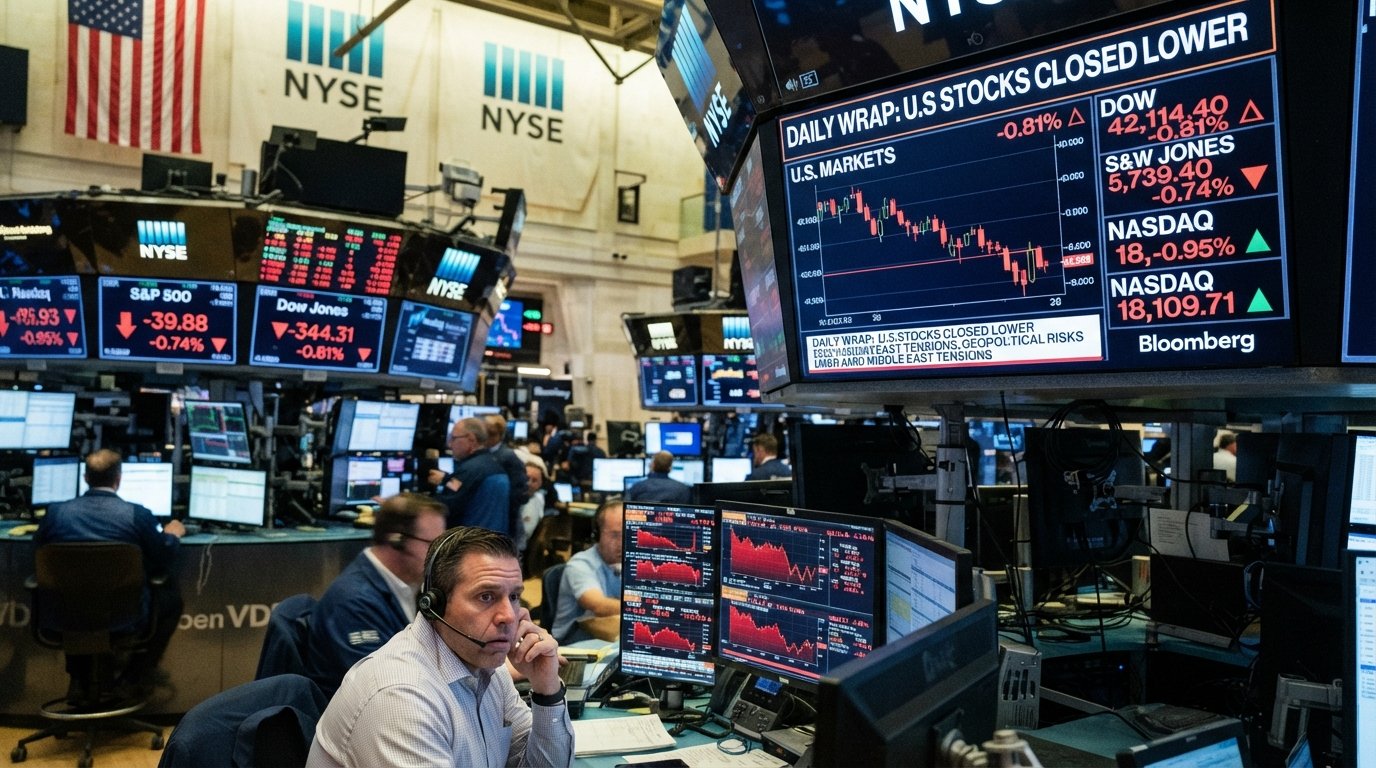














After Wednesday’s broad selloff, U.S. stock futures were flat overnight, according to CNBC, as investors caught their breath following a surge in Treasury yields to their highest levels since 2007. Thursday’s session brings a packed calendar of economic data and corporate earnings that will help determine whether the market’s rate scare deepens or stabilizes. Here is everything investors, market watchers and analysts need to know, based on Finviz’s economic and earnings calendars.
Economic Calendar: Thursday, Sept. 24
| Time (ET) | Release | Period | Consensus |
|---|---|---|---|
| 8:30 AM | Current Account Balance | Q2 | −$255B |
| 8:30 AM | Initial Jobless Claims | Week ending Sept. 19 | 201K |
| 10:00 AM | New Home Sales | August | 0.62M (annualized) |
Initial Jobless Claims (8:30 AM)
Weekly jobless claims are the most timely read on the labor market, and they carry extra weight this week. Economists expect 201,000 new claims — a historically low number consistent with a tight labor market. After Wednesday’s PMI data showed business activity at its strongest pace in more than five years, a low claims number would reinforce the case for another Federal Reserve rate hike in October. Markets currently price roughly 60% to 71% odds of that hike.
A surprise jump in claims, on the other hand, could ease rate fears and spark a relief rally in rate-sensitive stocks. It is worth noting that some analysts have questioned how much weight to place on low claims; one commentary featured on Finviz this week argued that low jobless claims are “half a misnomer,” as other labor indicators may show more softening.
Current Account Balance (8:30 AM)
The second-quarter current account deficit is expected at $255 billion. The current account measures the balance of trade in goods and services plus income flows between the U.S. and the rest of the world. A large deficit means the U.S. relies on foreign capital to finance its spending — a topic of heightened interest as Chinese President Xi Jinping visits Washington and trade negotiations continue. For bond markets, the current account matters because it relates to foreign demand for U.S. Treasuries at a time when yields are climbing.
New Home Sales (10:00 AM)
Economists forecast August new home sales at an annualized pace of 620,000. With 30-year mortgage rates at a two-year high above 7%, this report will show how much higher borrowing costs are weighing on housing demand. Finviz data show housing-related industries have been hammered: Mortgage Finance is down 39.30% year to date, Building Materials 21.33% and Home Improvement Retail 15.78%.
Earnings Calendar
Before the Open
- Darden Restaurants (DRI): The parent of Olive Garden and LongHorn Steakhouse is a key read on consumer dining spending. Restaurant stocks were under pressure Wednesday, with McDonald’s (MCD) falling 4.81% on Finviz. Investors will watch same-restaurant sales, traffic trends and commentary on food and labor cost inflation.
- TD SYNNEX (SNX): A major IT distributor and bellwether for the AI hardware buildout. Finviz’s Electronics & Computer Distribution industry is up 92.87% year to date, so expectations are high.
- BlackBerry (BB): Now focused on cybersecurity and automotive software. Cybersecurity stocks rallied 3% to 4% on Wednesday, raising interest in BlackBerry’s security business.
- Uxin (UXIN) and MITQ also report before the open.
After the Close
- Costco (COST): The headline event of the day. Costco is one of the best barometers of U.S. consumer health, and Finviz’s market summary specifically noted that Wednesday’s selloff came “ahead of Costco earnings.” Investors will focus on comparable-store sales, membership renewal rates, gasoline sales (a significant business for Costco when fuel prices are high) and any commentary on tariffs and pricing. Costco sits in the Consumer Defensive sector, which fell just 0.35% on Wednesday — the smallest decline among the 10 sectors that fell.
- Scholastic (SCHL) and LGCY also report after the close.
Looking Further Ahead
Finviz’s earnings calendar lists TBN for Friday, Sept. 25, and a busier slate on Monday, Sept. 28, including Jefferies Financial (JEF), Vail Resorts (MTN), IDT, IVA, TRAK, SANG, KNDI and NTWK. Jefferies will offer insight into investment banking and trading activity amid volatile markets, while Vail Resorts will provide a read on high-end discretionary spending.
Later this week, investors will also receive durable goods orders and consumer sentiment data, according to Charles Schwab’s weekly preview.
Other Key Factors
- Treasury yields: The 10-year yield near 5.1% is the single most important variable for stocks right now. A move toward 5.25% could extend the selloff; a retreat below 5% could spark a rebound.
- Trump–Xi summit: Treasury Secretary Scott Bessent said the U.S.-China trade truce has been extended two months. Headlines from the talks could move semiconductor stocks, Boeing and Asian markets.
- Oil prices: Brent briefly topped $100 on Wednesday. Watch for developments in U.S.-Iran talks and any decision on a proposed diesel export ban.
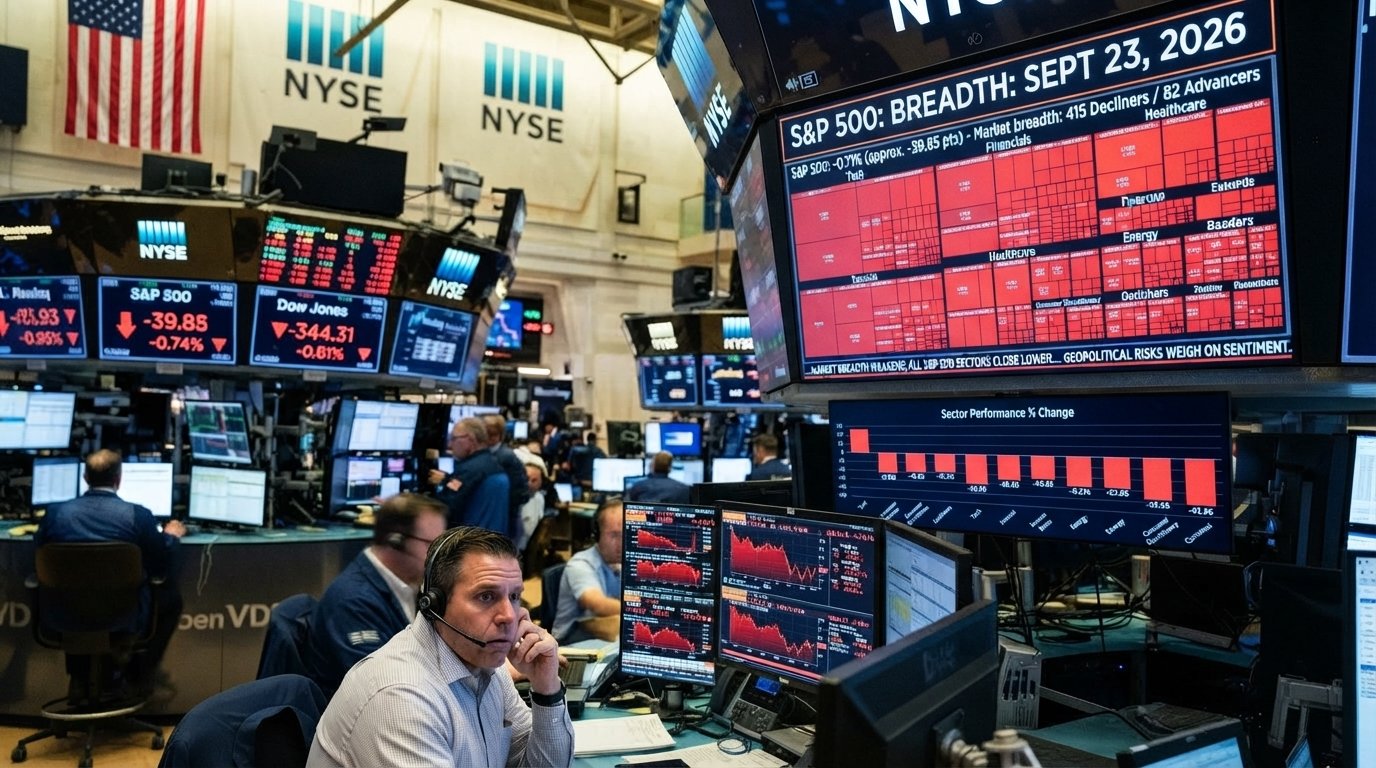
- Market breadth: Only 24.1% of stocks advanced on Wednesday. A meaningful improvement in breadth would be the first sign the selling is exhausted.
- Global markets: India’s National Stock Exchange makes its trading debut, and the yen is nearing 160 per dollar, raising the risk of Japanese intervention.
Market Setup
Heading into Thursday, the technical backdrop is fragile. Finviz data show just 32.5% of stocks trade above their 50-day moving averages and 42.6% above their 200-day averages. New 52-week lows outnumbered new highs 316 to 77 on Wednesday. Sector momentum is heavily concentrated in Technology, which is up 5.85% over the past week even after Wednesday’s 0.81% decline.
Historically, sharp one-day breadth washouts are sometimes followed by short-term bounces as oversold conditions attract buyers. But with the Fed signaling further hikes and yields at multi-decade highs, any rebound will need confirmation from the data. Thursday’s jobless claims and Costco’s results will be the first tests.
Quick Reference for Readers
- Investors: Focus on Costco’s consumer commentary and the 10-year yield.
- Market watchers: Track breadth and whether small caps stabilize after Wednesday’s 2.33% drop.
- Policymakers: Jobless claims and new home sales will show how the economy is absorbing tighter monetary policy.
- Economists: The current account will shed light on external financing needs as yields rise.
Data source: Finviz economic calendar, earnings calendar, breadth, sector and industry data as of the Sept. 23, 2026 close. Futures commentary from CNBC via Finviz news; weekly preview from Charles Schwab. Consensus figures are as listed on Finviz and may change. This article is for informational purposes only and is not investment advice.