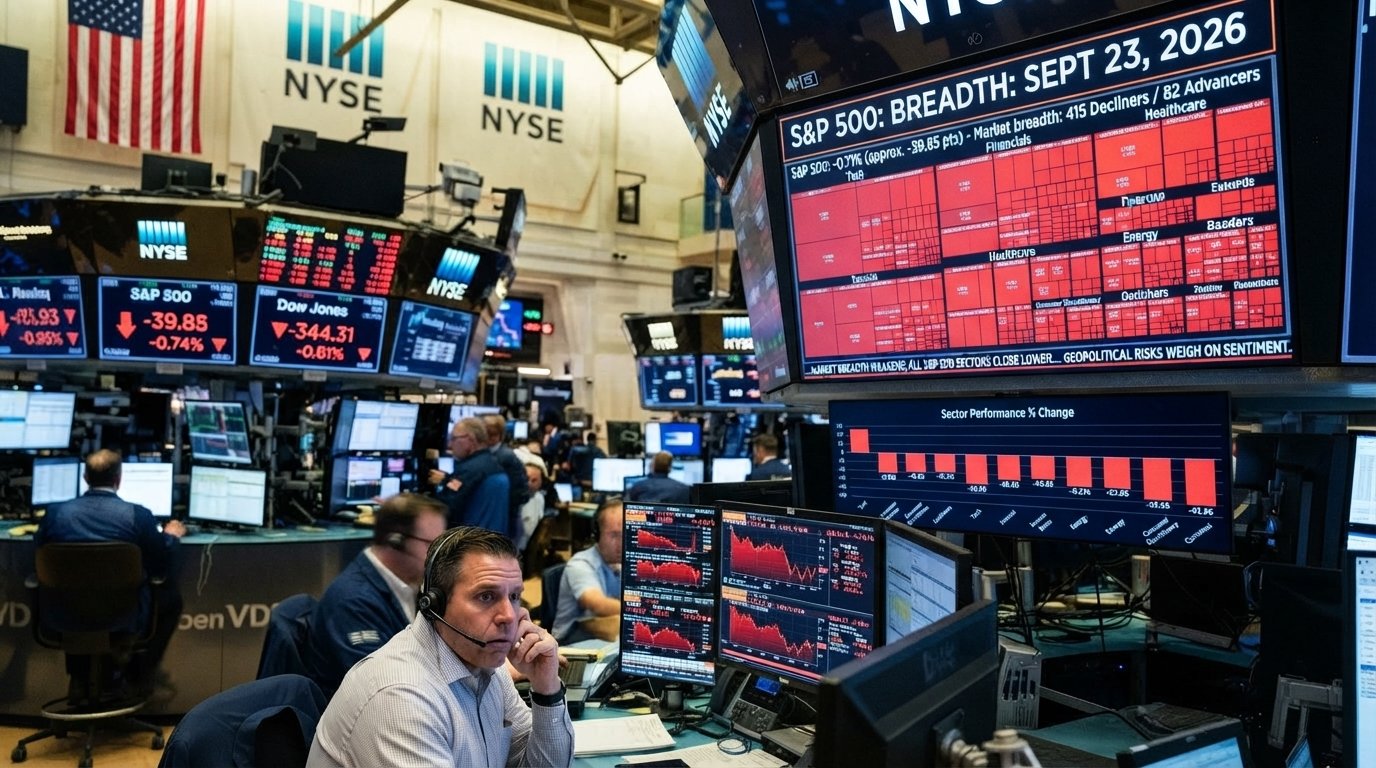















On a day when nearly three-quarters of U.S. stocks declined, one corner of the market held its ground.
Energy was the only sector tracked by Finviz to finish Wednesday’s session higher. It rose 0.84% as Brent crude briefly traded above $100 a barrel amid renewed tensions with Iran.
Moreover, Analysts noted Crude Crossed $100 before settling near $99 a barrel amid renewed tensions.
This move extends what has been the market’s most powerful sector trend of 2026.
Energy is up 36.31% year to date and 38.91% over the past 12 months.
Crude Crossed $100 before settling near $99 a barrel, and Technology’s 29.65% YTD gain trails Energy.
Energy Versus Everything Else
| Sector | Change Sept. 23 | Quarter | YTD | 1 Year |
|---|---|---|---|---|
| Energy | +0.84% | +14.40% | +36.31% | +38.91% |
| Technology | −0.81% | +8.66% | +29.65% | +28.83% |
| Basic Materials | −2.23% | +5.16% | +14.06% | +23.41% |
| Industrials | −0.69% | −7.08% | +8.88% | +10.75% |
| Utilities | −1.83% | −12.23% | −6.69% | −5.85% |
The quarterly figure stands out: Energy has gained 14.40% in the past three months, the best of any sector. Yet the sector has not been immune to volatility. Finviz shows it down 2.00% over the past week and 0.94% over the past month, a reminder that oil-linked equities can swing sharply with headlines out of the Middle East.
Integrated Majors Lead
Within the sector, Finviz industry data show that the large integrated oil companies did the heavy lifting on Wednesday. The Oil & Gas Integrated industry rose 1.64%, the second-best performance of any of Finviz’s 144 industries, and is now up 40.08% year to date. Oil & Gas Exploration & Production gained 1.01% on the day and is up 28.79% for the year, although it has fallen 3.39% over the past week and 5.46% over the past month.
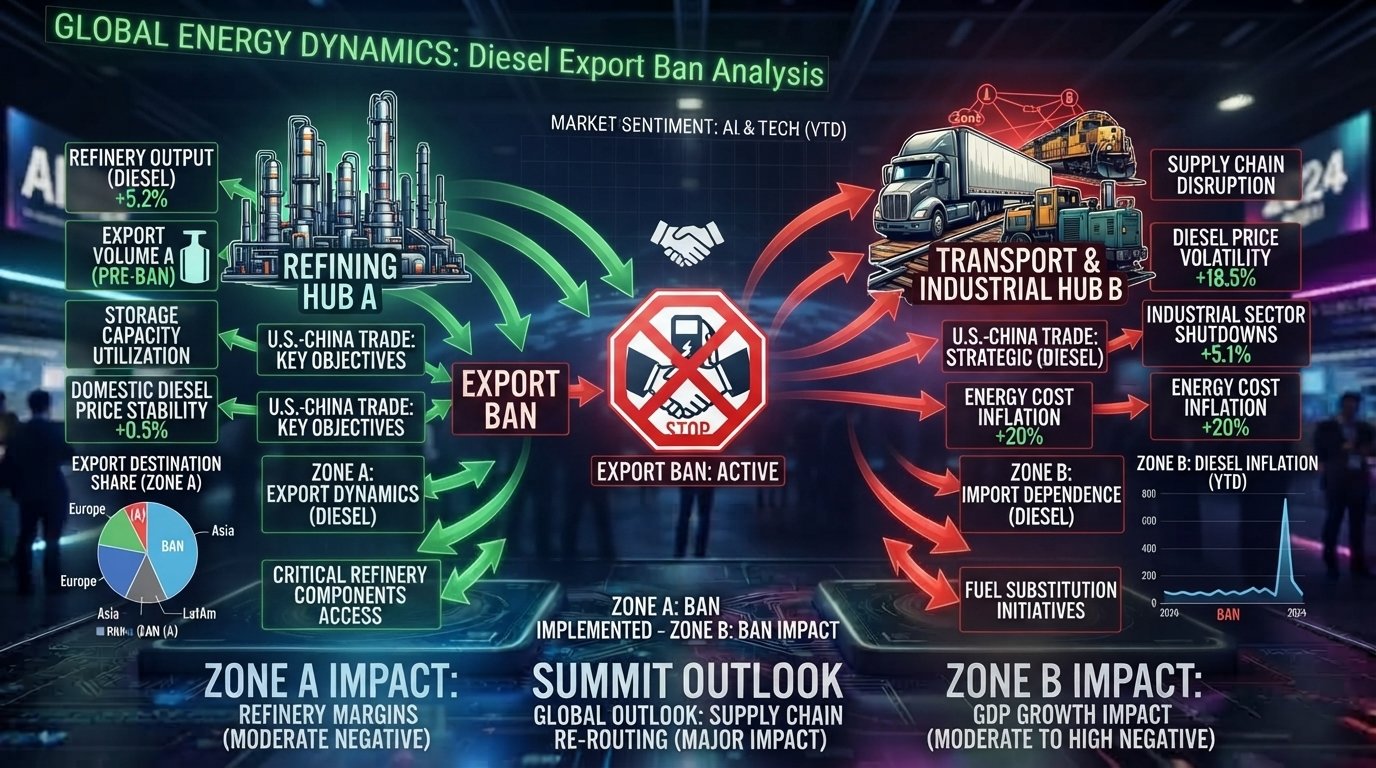
That split is worth noting. Integrated majors combine upstream production with refining and chemicals, and refining margins have been exceptionally strong. Diesel prices have been setting new records, and a Bloomberg report noted this week that the U.S. is preparing a plan for a possible 90-day diesel export ban — an idea Energy Secretary officials have reportedly discussed in the softer form of a voluntary export cap. Morgan Stanley warned that gasoline would cost more if such a ban were imposed. Refiners with strong domestic exposure have been among the beneficiaries of the tight market for distillates.
What Drove Oil Higher
Oil rose nearly 4% earlier this week on renewed U.S.-Iran tensions, Bloomberg reported. Moreover, Brent briefly crossed $100 before settling near $99 a barrel. West Texas Intermediate held around $90. President Trump described U.S.-Iran discussions at the United Nations as very good and productive. Another meeting is scheduled, which helped cap the rally.
Supply-side stress has shown up in shipping too. Moreover, a widely shared analysis this week notes the average supertanker day rate at about $1.2 million. It rose from roughly $29,900, reflecting disrupted trade routes and higher risk premiums. Additionally, Hurricane Polo has disrupted Mexican ports, adding uncertainty for energy logistics. Crude Crossed $100 before settling near $99 a barrel, reshaping market expectations.
Valuation: Still Cheap Relative to the Market
Despite its strong run, Energy remains one of the least expensive sectors on Finviz. The sector trades at a trailing price-to-earnings ratio of 13.89 and a forward P/E of 12.27, with a PEG ratio of 0.90 and a price-to-book ratio of 2.23. By comparison, Technology trades at a trailing P/E of 32.98 and Industrials at 36.72.
The low multiple reflects investors’ long-standing skepticism about how durable today’s commodity prices will be. Energy earnings are highly cyclical, and markets typically refuse to pay peak multiples on peak earnings. Still, Finviz shows analysts expecting 15.48% annual EPS growth over the next five years for the sector — not far behind Financials and Healthcare, and at a far lower valuation.
Why Energy Wins When Yields Rise
Wednesday’s selloff was driven by bond yields.
The 10-year Treasury yield rose to about 5.1%.
It was the highest level since 2007, and PMI data raised the odds of another Fed rate hike.
Most sectors suffer when yields climb because future earnings are discounted more heavily.
However, energy is different for three reasons:
Crude Crossed $100 before settling near $99 a barrel.
- Inflation linkage: Higher oil prices are themselves a source of inflation. When the market fears inflation, energy producers are often the direct beneficiaries.
- Near-term cash flows: Energy companies generate much of their value from current cash flow rather than distant growth, making them less sensitive to changes in discount rates.
- Low starting valuations: With a forward P/E near 12, there is less “multiple” to compress when rates rise.
The Policy Dilemma
For policymakers, $100 Brent is an uncomfortable number. The Fed’s September projections put 2026 headline PCE inflation at 3.7% and core at 3.4%, with a return to 2% not expected until 2029. Rising energy costs feed directly into headline inflation and indirectly into core through transportation and goods prices. That is part of why markets now assign roughly 60% to 71% odds to a second rate hike in October.
The prospect of a diesel export ban highlights the tension. Restricting exports might lower domestic fuel prices in the short run but would likely raise global prices, strain relationships with trading partners and potentially reduce refinery utilization over time. A Capital Spectator analysis circulating on Finviz this week argued that “the path to lower inflation still runs through Iran” — in other words, geopolitics may matter more for inflation than monetary policy in the near term.
Global Ripple Effects
The oil rally is being felt worldwide. Reuters reported that Australian shares hit a more-than-three-month low as the oil rally revived inflation worries, and that Indian shares were set to open lower with crude above $100. Bloomberg noted that AirAsia’s hunt for cheaper debt won’t be easy with $100 oil, and Finviz shows the U.S. Airlines industry down 2.84% on Wednesday. For energy-importing economies, higher crude prices act as a tax on consumers and a drag on growth.
What Investors Should Watch
The key variables for energy stocks in coming weeks are the outcome of U.S.-Iran talks, any formal decision on diesel exports, the trajectory of Treasury yields and demand signals from China as President Xi Jinping visits Washington. A diplomatic breakthrough could quickly take the geopolitical premium out of crude. Conversely, a breakdown in talks could send Brent sustainably above $100.
Energy’s role as a portfolio hedge against inflation and geopolitical risk has rarely been more visible than it was on Wednesday, when it was the only sector left standing.
Data source: Finviz sector, industry and valuation data as of the Sept. 23, 2026 close. Oil prices supplemented by TheStreet and Yahoo Finance closing reports; headlines via Finviz news feed. This article is for informational purposes only and is not investment advice.