













Technology has been the engine of the 2026 stock market. According to Finviz, the sector has gained 29.65% year to date, 37.50% over the past six months and 5.85% in the past week alone. That surge carried the Nasdaq Composite to consecutive record closes on Monday and Tuesday, including a record finish at 27,244 on Sept. 22.
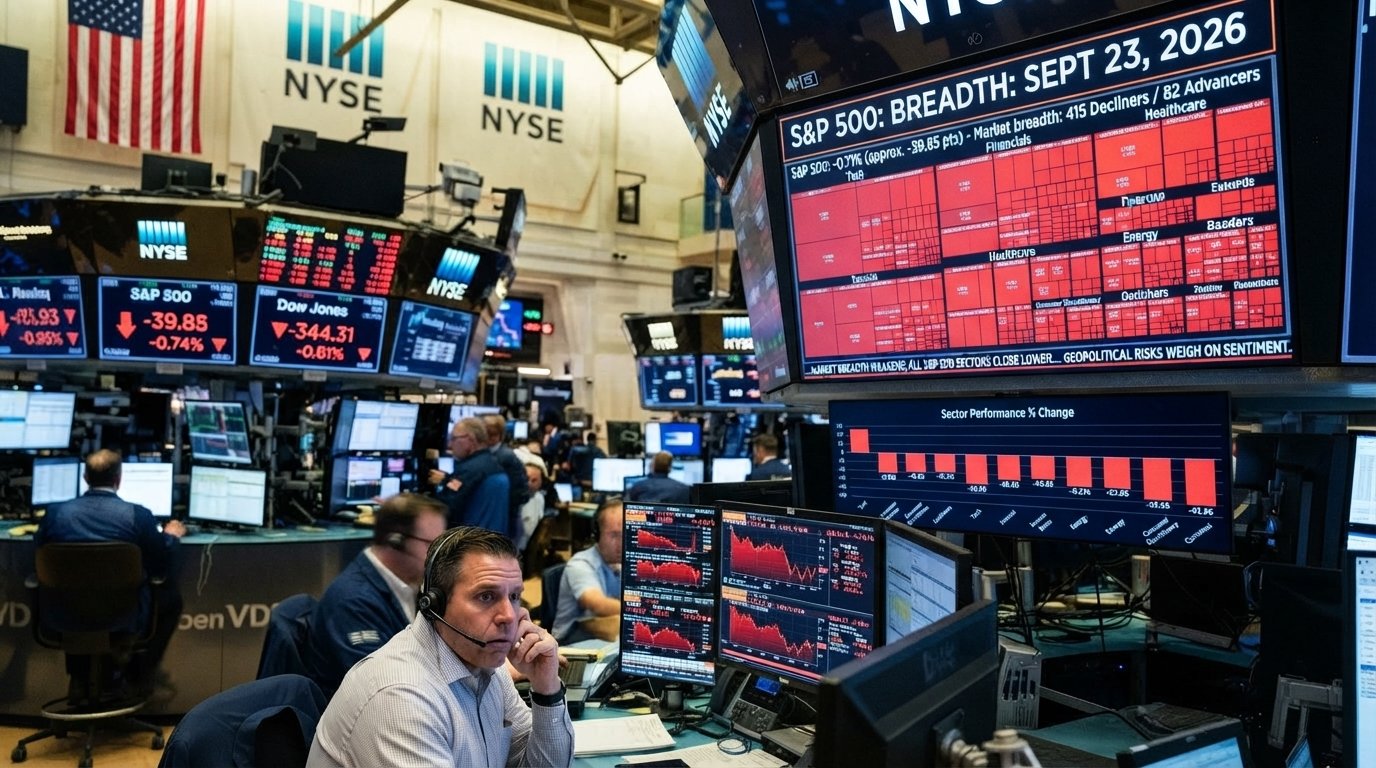
Then came Wednesday. The 10-year Treasury yield jumped to roughly 5.1%, its highest since 2007, after a much stronger-than-expected reading on business activity. The Nasdaq fell about 1.1%, and Finviz’s Technology sector declined 0.81%. The drop was modest compared with the sector’s recent gains, but it raised an important question: how much longer can tech valuations defy the gravity of higher interest rates?
Where Tech Valuations Stand
Finviz’s sector valuation screen shows how richly the market is pricing technology relative to the rest of the economy:
| Sector | P/E | Forward P/E | PEG | P/S | P/B | EPS Growth Next 5Y |
|---|---|---|---|---|---|---|
| Technology | 32.98 | 22.29 | 0.73 | 8.28 | 10.88 | 45.25% |
| Communication Services | 18.08 | 19.72 | 0.99 | 4.90 | 4.88 | 18.33% |
| Financial | 14.57 | 13.57 | 1.19 | 2.28 | 2.05 | 12.28% |
| Energy | 13.89 | 12.27 | 0.90 | 1.33 | 2.23 | 15.48% |
Three observations stand out. First, the sector’s total market capitalization on Finviz is about $35.38 trillion, more than double the next-largest sector (Financial, at $14.38 trillion). Technology is not just a large part of the market; it effectively is the market for index investors.
Second, the gap between trailing P/E (32.98) and forward P/E (22.29) is unusually wide. That implies analysts expect earnings to rise sharply over the next year — a bet on continued AI-driven demand for chips, cloud infrastructure and software.
Third, the PEG ratio of 0.73 is actually the lowest of any sector, because analysts project 45.25% annual EPS growth over the next five years. On a growth-adjusted basis, tech looks cheap. On an absolute basis — 8.28 times sales and nearly 11 times book value — it looks expensive. Which lens proves correct depends almost entirely on whether those growth forecasts are met.
Why Yields Matter So Much for Tech
A stock’s value is the present value of its future cash flows. Technology companies, especially those investing heavily in AI, derive a large share of their value from earnings expected many years out. When the discount rate rises, those distant cash flows are worth less today. That is why tech tends to be the most rate-sensitive part of the equity market.
A simple way to see the pressure is the earnings yield, which is the inverse of the P/E ratio. At a trailing P/E of 32.98, the tech sector’s earnings yield is about 3.0%. At a forward P/E of 22.29, it is about 4.5%. Both are below the roughly 5.1% now available on a 10-year Treasury note, which carries no default risk. In other words, investors are accepting a lower current yield on tech stocks than on government bonds, betting that growth will more than make up the difference.
That bet has paid off handsomely so far in 2026. But each increase in yields raises the bar.
Wednesday’s Tech Movers
Finviz’s heavily traded names showed a mixed picture inside tech and adjacent sectors on Wednesday:
- Nvidia (NVDA): −1.47%
- Micron Technology (MU): −2.22%
- Oracle (ORCL): −3.11%
- Apple (AAPL): −0.80%
- Shopify (SHOP): −3.66%
- Microsoft (MSFT): +0.52%
- Palantir (PLTR): +3.68%
The losses were concentrated in capital-intensive AI infrastructure names like Oracle and Micron, which have borrowed or invested heavily to build data center capacity. Higher rates raise the cost of that buildout. Microsoft and Palantir — companies with strong balance sheets or clear software margins — held up better. Cybersecurity stocks including CrowdStrike, Palo Alto Networks and Okta rose 3% to 4%, and Finviz shows the Software – Infrastructure industry gained 0.79% on the day.
One tech-adjacent industry posted an extraordinary performance: Finviz’s Electronics & Computer Distribution group rose 1.93% on Wednesday and is up an eye-catching 92.87% year to date, with a 15.35% gain over the past month. TD SYNNEX (SNX), a major distributor in this space, reports earnings before Thursday’s open.
The Concentration Risk
Finviz’s capitalization data show mega caps have gained 18.42% over six months and 10.38% year to date, but they fell 1.06% on Wednesday — more than large caps overall (−0.76%). When a small number of very large companies dominate index returns, their bad days become everyone’s bad days. Reuters noted this week that fewer stocks are carrying the market than at any time since the dot-com peak, a comparison that inevitably invites questions about whether history could rhyme.
There are important differences from 2000. Today’s tech leaders are highly profitable, generate enormous free cash flow and, in many cases, carry net cash on their balance sheets. The forward P/E of 22.29 is well below the extreme multiples of the dot-com era. But there are similarities too: enthusiasm about a transformative technology, heavy capital spending and a market that has become increasingly reliant on a single theme.
What Would Change the Picture
For technology stocks, three factors will likely determine the next leg:
- The Fed’s October decision. Markets price roughly 60%–71% odds of another 25-basis-point hike. A hike that is accompanied by signals of a pause could actually relieve pressure on long-term yields.
- AI monetization. Meta’s announcement that its Muse agent will take a fee on transactions is one example of the industry moving from building AI to charging for it. Clear revenue streams would help justify current multiples.
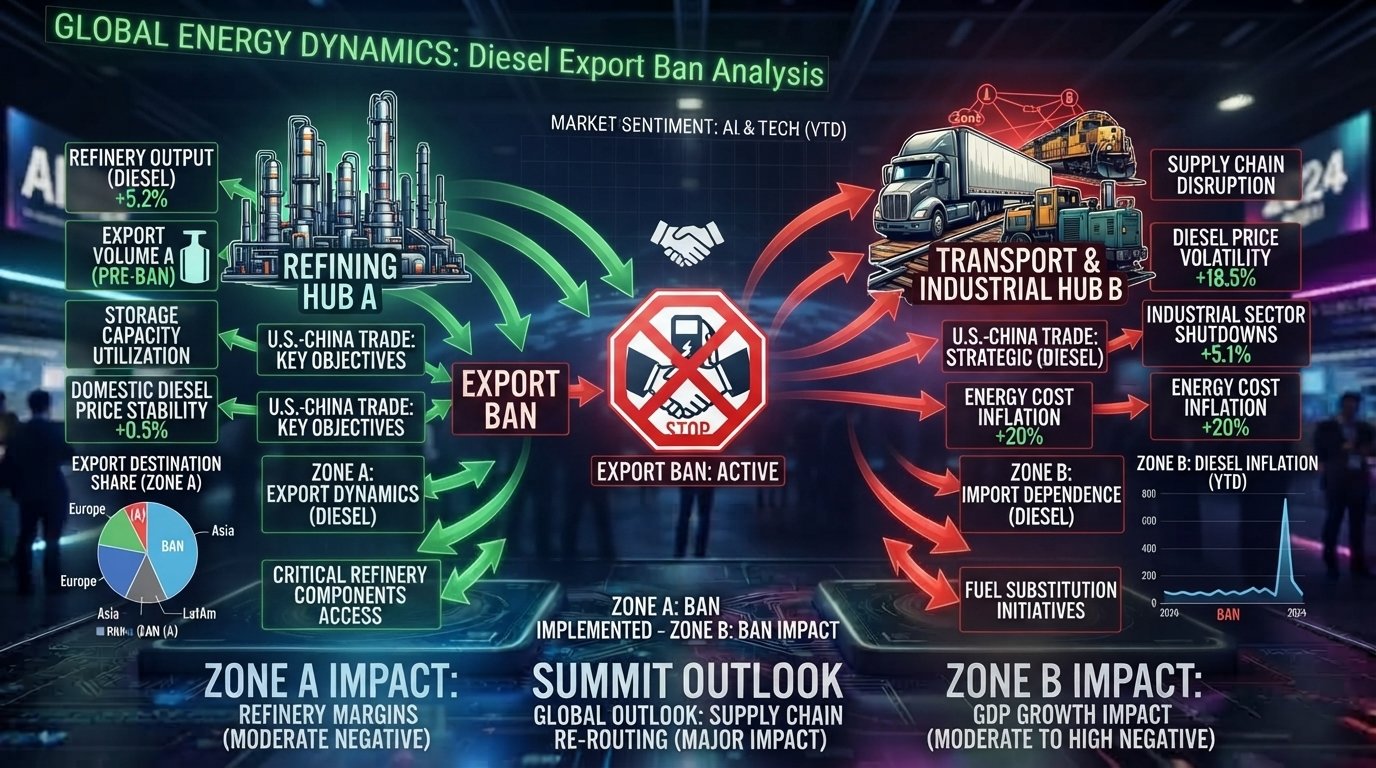
- Trade policy. The U.S.-China trade truce has been extended for two months, according to Treasury Secretary Scott Bessent, as Xi Jinping begins a state visit. Semiconductor export controls remain a key risk for chipmakers.
Guidance for Different Readers
Long-term investors may want to review whether their portfolios have become unintentionally concentrated in technology after a 37.50% six-month rally. Rebalancing is not the same as market timing; it is simply returning to a chosen risk level.
Market watchers should monitor the relationship between the 10-year yield and the Nasdaq. If tech continues to rise even as yields climb, it signals very strong conviction in earnings growth. If tech begins to sell off with each uptick in yields, the rate sensitivity is reasserting itself.
Policymakers and economists should note that tech’s weight in the market means equity wealth effects are increasingly tied to a single sector. A sharp correction in tech would tighten financial conditions far more than its share of GDP would suggest.
Technology remains the market’s leader. But at 5% Treasury yields, leadership comes with a much higher hurdle.
Data source: Finviz sector performance, sector valuation, industry and quote data as of the Sept. 23, 2026 close. Yield figures from TheStreet and Yahoo Finance. This article is for informational purposes only and is not investment advice.