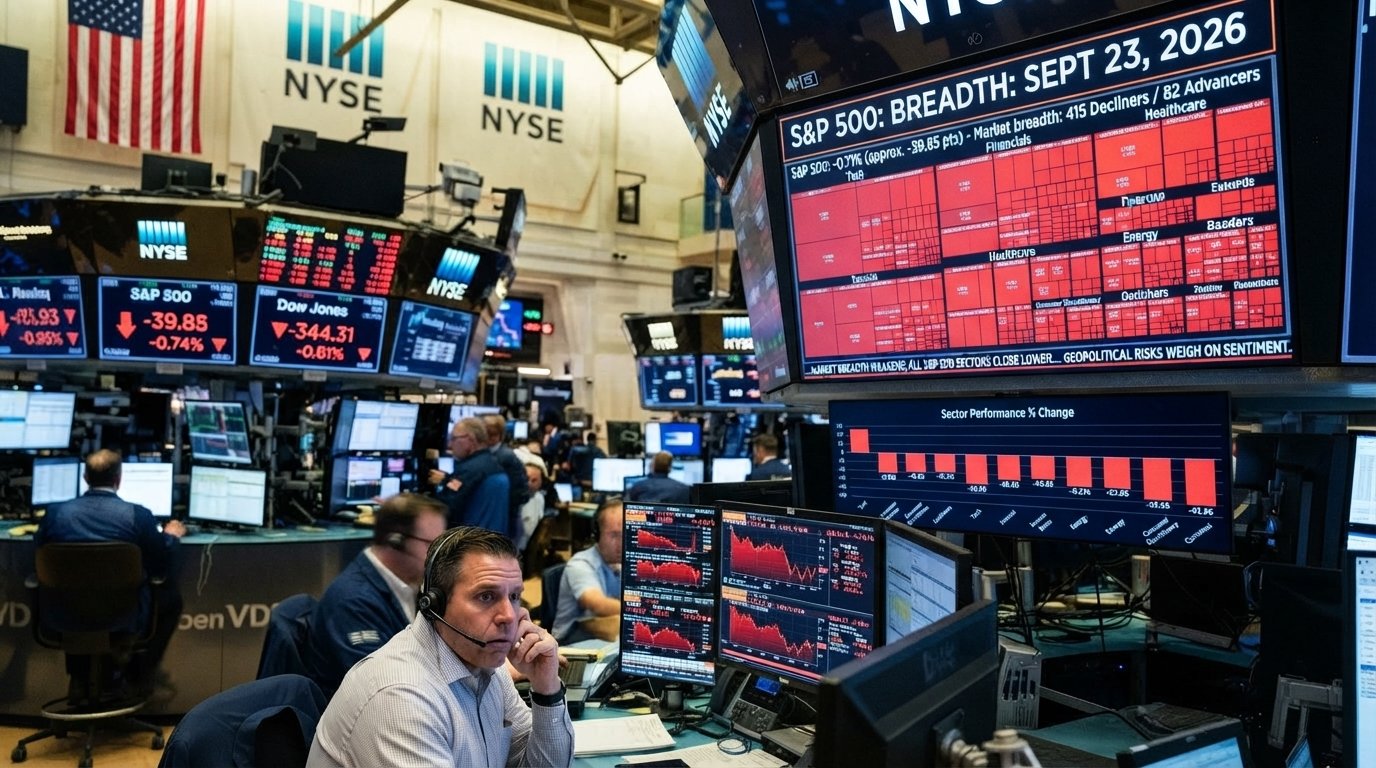













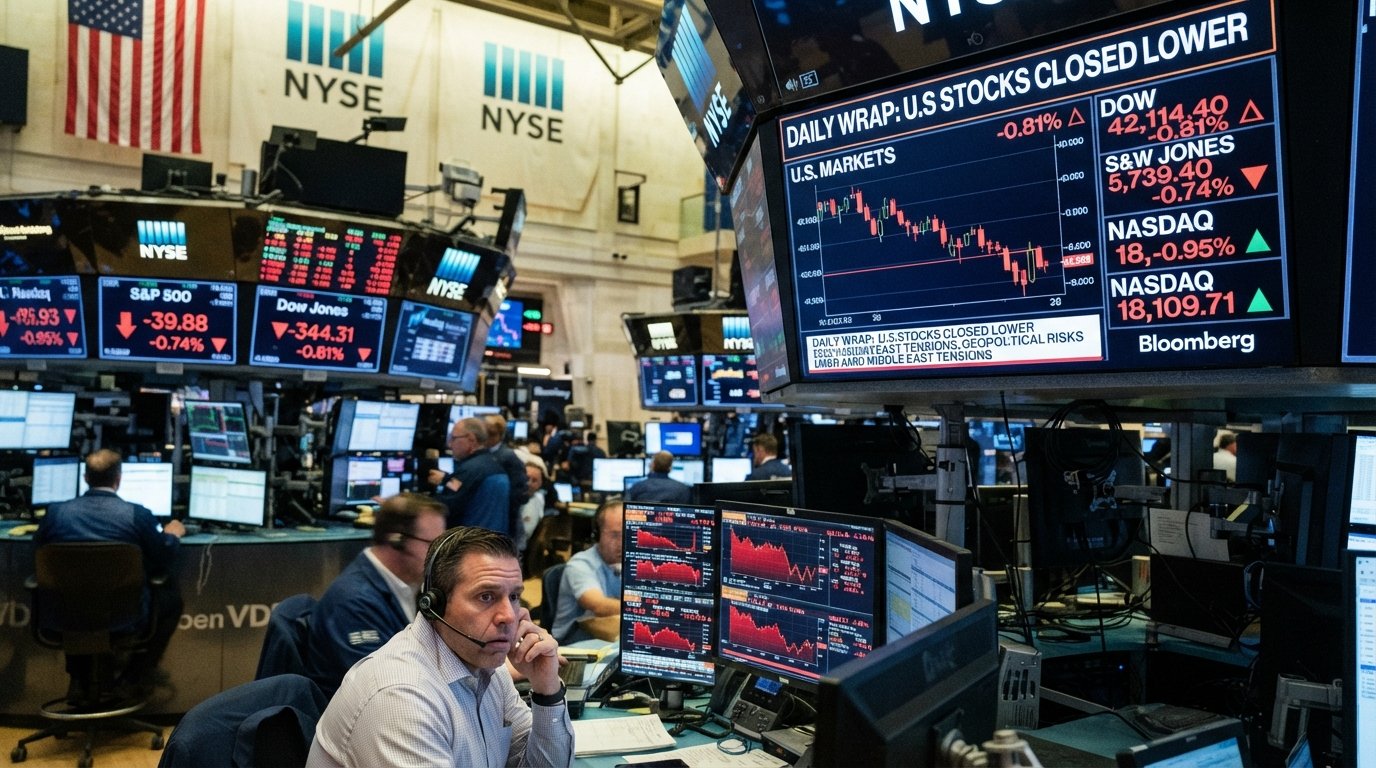
Down days reveal a great deal about where investor conviction really lies. On Wednesday, Sept. 23, 2026, as the 10-year Treasury yield rose to about 5.1% and roughly 72% of U.S. stocks declined, a small group of companies and industries not only held up but moved higher. Finviz data show these pockets of relative strength were concentrated in cybersecurity, AI software, integrated energy, specialty industrials and a handful of defensive niches.
Relative strength — how a stock performs compared with the broader market — is one of the most closely watched signals among professional investors. Stocks that rise when the market falls are often those with the strongest institutional demand, and they frequently become leaders when the market recovers.
The Large-Cap Standouts
Among the heavily traded names highlighted on Finviz, several stood out for finishing in positive territory:
| Company | Ticker | Change Sept. 23 |
|---|---|---|
| Palantir Technologies | PLTR | +3.68% |
| Boeing | BA | +1.12% |
| Meta Platforms | META | +1.02% |
| Microsoft | MSFT | +0.52% |
Palantir’s 3.68% gain was particularly notable given that the software company trades at a premium valuation — exactly the kind of stock that typically suffers most when yields rise. Its resilience suggests investors continue to view its government and commercial AI platforms as a secular growth story insulated from the rate cycle. Palantir’s strong ties to defense and intelligence agencies may also have attracted buyers at a time of elevated geopolitical tension, with U.S.-Iran talks ongoing and concerns about the war in Ukraine resurfacing.
Cybersecurity Rallies
The clearest theme among Wednesday’s winners was cybersecurity. According to closing reports from Benzinga and The Motley Fool, CrowdStrike, Palo Alto Networks and Okta each gained between 3% and 4%. Finviz’s Software – Infrastructure industry, which includes many security vendors, rose 0.79% on the day and is up 3.33% over the past week and 5.58% over the past month.
Why cybersecurity, and why now? Several factors are likely at work. First, the rise of AI agents like Meta’s Muse — which can act on users’ behalf and complete transactions — dramatically expands the attack surface for fraud and data breaches. A Seeking Alpha analysis on Finviz this week argued that “rogue AI agents need guardrails,” a thesis that directly supports demand for security software. Second, cybersecurity spending is widely considered non-discretionary: companies cut back on many things in a downturn, but rarely on protecting their networks. Third, geopolitical tension typically raises awareness of state-sponsored cyber threats.
Quantum Computing Gets a Boost
IonQ rose 4.9% on Wednesday after demonstrating quantum error correction, according to Benzinga. This followed an 11% surge earlier in the week when the company announced a separate quantum computing milestone, per Charles Schwab’s market update. Quantum computing remains a speculative, early-stage industry, but progress on error correction is considered one of the key technical hurdles to building commercially useful machines.
Finviz’s Top-Performing Industries
Finviz tracks 144 industries. On Wednesday, the 15 best performers were:
- Electronics & Computer Distribution: +1.93% (YTD +92.87%)
- Oil & Gas Integrated: +1.64% (YTD +40.08%)
- Textile Manufacturing: +1.16% (YTD +18.83%)
- Chemicals: +1.16% (YTD +18.68%)
- Education & Training Services: +1.08% (YTD −1.37%)
- Financial Data & Stock Exchanges: +1.02% (YTD −7.13%)
- Oil & Gas E&P: +1.01% (YTD +28.79%)
- Software – Infrastructure: +0.79% (YTD +10.32%)
- Insurance – Diversified: +0.69% (YTD +1.04%)
- Railroads: +0.51% (YTD +20.98%)
- Confectioners: +0.45% (YTD +8.04%)
- Tools & Accessories: +0.42% (YTD +14.80%)
- Insurance – Reinsurance: +0.41% (YTD +16.20%)
- Industrial Distribution: +0.35% (YTD +11.50%)
- Farm & Heavy Construction Machinery: +0.33% (YTD +37.58%)
A few of these deserve special attention. Electronics & Computer Distribution is one of the best-performing industries of 2026, nearly doubling this year, as distributors of servers, networking gear and components benefit from the AI infrastructure buildout. TD SYNNEX (SNX), a bellwether for the group, reports before Thursday’s opening bell.
Financial Data & Stock Exchanges tends to benefit from volatility, because exchanges earn fees on trading volume and data providers see higher demand when markets move. The group is down 7.13% this year but rose 1.02% on a day of heavy selling. News that India’s National Stock Exchange is preparing for its trading debut also kept global exchange operators in the spotlight.
Insurance – Reinsurance and Insurance – Diversified both rose. Insurers typically benefit from higher interest rates because they invest large premium reserves in fixed-income securities; higher yields translate directly into higher investment income.
Farm & Heavy Construction Machinery, up 37.58% this year, and Railroads, up 20.98%, reflect the strength of the real economy. With September’s composite PMI at 58.4 — the strongest reading in more than five years — companies tied to physical activity and infrastructure are seeing real demand.
New Highs Amid the Selloff
Only 77 stocks made new 52-week highs on Wednesday, according to Finviz, compared with 316 new lows. Among the notable new highs was Worthington Enterprises (WOR), which closed at $59.70, up 1.29%. The stock jumped 16% earlier in the week on enthusiasm about demand for data center cooling products, according to Charles Schwab. Other new highs included TJGC (+37.75% to $23.28), VNCE (+9.57% to $11.11) and CBAT (+13.18% to $1.46). Finviz flagged TJGC and CBAT as technically overbought.
What Relative Strength Tells Investors
Stocks and industries that rise on broad down days often share a few characteristics: durable demand, pricing power, a direct link to inflation or rising rates, or a strong secular growth story. Wednesday’s winners fit these categories neatly:
- Secular growth: Palantir, cybersecurity, quantum computing, AI hardware distribution.
- Inflation beneficiaries: Integrated oil and gas, E&P producers, chemicals.
- Rate beneficiaries: Insurers and reinsurers.
- Real-economy strength: Railroads, heavy machinery, industrial distribution.
For market watchers, the list is a useful map of where institutional money is flowing when conditions get difficult. For long-term investors, it is a reminder that diversification across themes — not just across stocks — can help cushion portfolios during rate shocks.
A Word of Caution
Relative strength over a single session is not a reliable signal on its own. A stock that rises on one down day may simply have benefited from company-specific news. What matters more is whether these leaders continue to outperform over weeks and months. Investors should also be mindful that some of the strongest performers, like the Electronics & Computer Distribution industry, have already posted enormous gains, raising the risk of sharp pullbacks if sentiment shifts.
Still, in a market where the average stock is below its 50-day moving average, the companies that are bucking the trend deserve a close look.
Data source: Finviz quote, industry, signal and new-high data as of the Sept. 23, 2026 close. Cybersecurity and IonQ moves from Benzinga, The Motley Fool and Charles Schwab reports. This article is for informational purposes only and is not investment advice.